
Finding the best cities to visit in Europe in December comes down to looking for places that truly embrace the winter season rather than just surviving it. Having lived in Europe across several Decembers, arriving here at this time of year feels less like taking a vacation and more like coming home.
One of our favorite holiday memories was gathering the whole family in Venice to celebrate Christmas and New Year’s. We stayed in a beautiful villa tucked just off the Grand Canal, and the city felt like another world entirely: there was no one there—and we truly mean no one.
When the winter high tides rolled in, we balanced along the raised wooden passerelle planks just to navigate the alleyways. We’d duck into The Caffe Rosso in the Campo Santa Margherita piazza for lunch, ordering small plates alongside a Campari (of course!), surrounded only by neighborhood residents.
By New Year’s Eve, the city lit up with spectacular midnight fireworks over the lagoon—a joyful celebration, yet entirely local.

That experience captured the true essence of Europe in midwinter that summer travelers never get to see. The frantic tourist pace evaporates and the streets become hauntingly empty. The biting chill in the air makes the warmth waiting on the other side of heavy tavern doors, century-old coffeehouses, and steaming bathhouses feel profoundly comforting.
If your winter travel instinct is strictly to escape gray skies and hunt for sunshine, we completely understand. We spent months tracking down the continent’s mildest coastal routes in our companion guide on Where Is it Hot in Europe in December.
Looking for the big Christmas markets instead? If your December trip is built entirely around market chalets, handmade ornaments, and massive light canopies, jump over to our dedicated guide on the Best Christmas Markets in Europe where we break down Vienna, Strasbourg, Prague, Munich as well as a few others.
When deciding where to go in Europe in December for authentic winter atmosphere, look for places that wear the season like a second skin: medieval stone alleys lit by copper lanterns, steaming thermal pools under falling frost, candlelit waterside cellars, and streets that look far better under early twilight than in the glare of July.
Whether you crave historic canal walks, quiet alpine lakes, or thermal relief, these are the best cities to visit in Europe in December that make winter feel truly magical.
Quick Comparison: Best Cities to Visit in Europe in December
| Destination | December Highlights | Daylight & Weather |
| Tallinn, Estonia | Medieval snow globe, lanterns, sauna culture | ~6h light | -4°C to 1°C |
| Utrecht, Netherlands | Wharf cellars, gezelligheid, brown cafés | ~7.5h light | 2°C to 6°C |
| Ghent, Belgium | Moody canal reflections, quiet art, Trappist beer | ~8h light | 3°C to 7°C |
| Budapest, Hungary | Steaming outdoor baths, budget grand architecture | ~8.5h light | -1°C to 4°C |
| Innsbruck, Austria | Old town with direct funicular to alpine snow | ~8.5h light | -3°C to 4°C |
| Ljubljana / Bled, Slovenia | Riverside fire pits, silent alpine lake walks | ~8.5h light | -1°C to 5°C |
| Český Krumlov, Czechia | Bohemian fortress lanes with zero tour crowds | ~8h light | -3°C to 2°C |
| Akureyri, Iceland | Forest Lagoon geothermal soak, northern lights | ~3.5h light | -4°C to 1°C |
1. Tallinn, Estonia: The Baltic Snow Globe & Sauna Culture

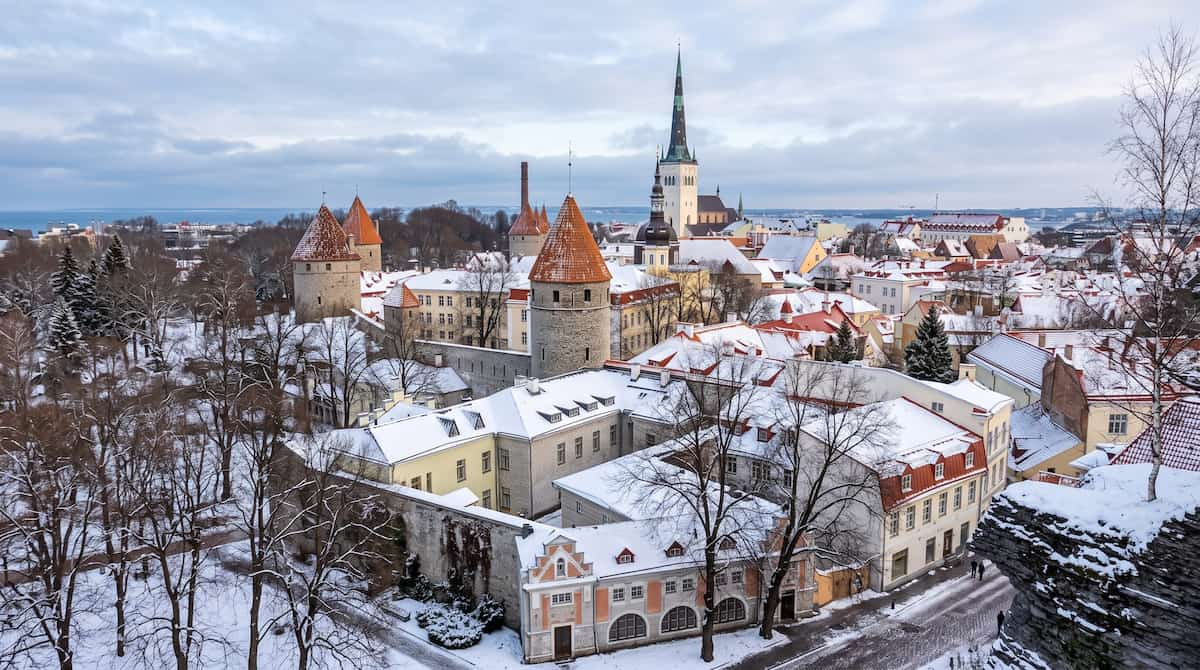
If you are going to embrace real winter cold, do it in a place that has spent 800 years perfecting it. Tallinn is easily one of the most striking European cities to visit in December. While Western Europe often gets unpredictable gray drizzle, Estonia’s latitude gives you a high probability of crisp, powdery snow blanketing its UNESCO-listed Old Town.
- The Winter Atmosphere: Turrets, 13th-century limestone defense walls, and cobblestone lanes illuminated by copper lanterns. The low Baltic sun casts long, amber shadows across the terracotta roofs by 3:00 PM.
- What to Do: Climb up to the Patkuli and Kohtuotsa viewing platforms on Toompea Hill for views over snow-dusted church spires running down to the icy Gulf of Finland. Duck into the hidden courtyard of Meistrite Hoov (Masters’ Courtyard) for hot drinking chocolate at Pierre Chocolaterie, and spend an afternoon at Kalma Saun, Tallinn’s oldest public bathhouse operating since 1928, to thaw out in traditional wood-fired steam rooms alongside neighborhood locals.
- Where to Stay for Winter Vibes: Hotel Telegraaf. A historic 1878 telegraph exchange steps from the central square with a subterranean vaulted spa and heated indoor pool to escape the sub-zero chill.
- Eat & Drink: Order a bowl of Gentse Waterzooi (a rich, savory herb-and-vegetable stew originally created in Ghent) alongside a Trappist quadrupel.
Traveler Tip: Daylight is brief (roughly 9:00 AM to 3:15 PM), so hit outdoor scenic viewpoints early and save indoor museum visits, cellar restaurants, and saunas for the afternoon.
(For our complete walking routes, neighborhood guides, and practical Baltic transit tips, dive into our comprehensive travel guide to Estonia and Tallinn.)
2. Utrecht, Netherlands: Candlelit Wharf Cellars & Dutch Gezelligheid

While most travelers default to Amsterdam, Utrecht gives you the quintessential historic canal experience with a fraction of the crowds. The Dutch have a cultural concept called gezelligheid—an untranslatable word capturing cozy, warm, shared comfort—and Utrecht embodies it throughout December.
- The Winter Atmosphere: Unlike Amsterdam, Utrecht features unique two-tier canals with split-level wharves. In the 14th century, storage cellars were carved out at the water’s edge below street level. Today, these barrel-vaulted brick caves house candlelit bistros, craft beer cellars, and acoustic music bars right at the water’s surface.
- What to Do: Climb the 465 steps of the Dom Tower (Domtoren) for a panoramic view over frosted brick gables, or explore the quiet cloisters of the Pandhof courtyard garden. Spend late afternoons tucked inside a traditional Bruine Kroeg (historic wood-paneled “brown café”) like Belgian Beer Café Olivier (housed in an enormous former church) or De Drie Dorstige Herten, pairing seasonal dark bock beers with warm bitterballen.
- Where to Stay for Winter Vibes: The Nox Hotel or a converted Oudegracht Wharf Cellar Suite, where you sleep inside a barrel-vaulted brick chamber right along the canal basin.
- Winter Treats: Watch for street-side bakery carts selling hot, freshly fried oliebollen (traditional Dutch winter dough pastries dusted in powdered sugar).
3. Ghent, Belgium: Moody Canals & Monastic Beer Taverns

Ghent in December is where you go if you love dark brick facades, shimmering water reflections, and deep culinary traditions. While neighboring Bruges can feel quiet to the point of shuttered in the winter off-season, Ghent remains a lively university city with an unpretentious edge.
- The Winter Atmosphere: The imposing 12th-century Gravensteen (Castle of the Counts) rises directly above the moat waters in the center of town. Ghent has an award-winning urban lighting design that illuminates its medieval bridges, guild houses, and Gothic towers with a warm glow designed specifically to avoid harsh light pollution.
- What to Do: Visit Saint Bavo’s Cathedral to see the restored van Eyck brothers’ masterwork, the Ghent Altarpiece, without the tour-bus crowds of spring. Later, warm up along the canal at Het Waterhuis aan de Bierkant or order a drink inside ‘t Galgenhuisje (the smallest and oldest tavern in Ghent, tucked into the Groentenmarkt since 1776). For a famous local ritual, visit De Dulle Griet, where ordering their massive 1.2-liter house ale requires surrendering one shoe into a hanging ceiling basket as collateral until your glass is returned safely.
- Where to Stay for Winter Vibes: 1898 The Post. Set in the upper levels of the former central post office right along the Graslei canal, with wood-paneled rooms, green velvet furniture, and tall windows looking across Gothic spires.
- Eat & Drink: Order a bowl of Gentse Waterzooi (a rich, savory herb-and-vegetable stew originally created in Ghent) alongside a Trappist quadrupel.
4. Budapest, Hungary: The Master of Outdoor Thermal Soaks

Budapest frequently makes shortlists because it remains one of the best-value European city breaks in December, but its real distinction during cold weather is its geothermal infrastructure. Sitting above hundreds of natural mineral springs, Budapest turns freezing air into an asset.
- The Winter Atmosphere: Broad imperial boulevards, retro yellow streetcars rattling along the Danube embankment, and ruin bars hidden behind heavy draft curtains in the historic Jewish Quarter.
- The Thermal Routine: Sink into the 38°C outdoor mineral pools of Széchenyi Baths while morning frost clings to the surrounding neo-baroque columns and steam billows into the winter air. If you prefer vaulted stone domes and quieter waters, visit the 16th-century Ottoman-era Rudas Baths (check weekday schedules) or the Art Nouveau indoor halls of Gellért.
- Where to Stay for Winter Vibes: Mystery Hotel Budapest. An eclectic boutique property set in a former 19th-century Freemason lodge featuring an indoor spa hidden under baroque arches, or a boutique stay on the Castle Hill side for panoramic winter sunrises over Parliament.
- Cozy Escapes: Between outdoor walks, head into one of Budapest’s century-old grand coffeehouses, such as Central Grand Café or Café Gerbeaud, for espresso and warm walnut strudel.
For a deeper breakdown of bathhouse etiquette, neighborhood ruin bars, and budget transit, check out our dedicated Budapest city guide.
5. Innsbruck, Austria: Alpine Peaks Looming Over Old-Town Streets

If your idea of one of the best European city breaks in winter includes real snow and jagged mountains, Innsbruck delivers something rare among European cities: true alpine wilderness directly accessible from a historic core.
- The Winter Atmosphere: The pastel facades of the old town sit in the shadow of the Nordkette mountain range, whose frosted 2,000-meter limestone peaks rise directly behind the rooftops. The air is dry, crisp, and smells of valley woodsmoke.
- What to Do: Stroll past the 15th-century Golden Roof (Goldenes Dachl), then walk two minutes to the futuristic Hungerburg Funicular station designed by Zaha Hadid. Within 20 minutes, you travel from city cobblestones directly up to 2,256 meters at the top station of Hafelekar for panoramic winter views over the Karwendel Alps.
- Where to Stay for Winter Vibes: aDLERS Hotel Innsbruck. The glass-fronted rooms frame the entire mountain bowl, and the 11th-floor panoramic Finnish sauna lets you sweat with a direct view over the snow-covered rooftops of the valley.
- Eat & Drink: Settle into a wood-paneled Tirolean Stube for Tiroler Gröstl (crisp pan-fried potatoes, beef, and onions topped with a fried egg) and warm cloudy apple strudel.
6. Ljubljana & Lake Bled, Slovenia: Riverside Warmth & Frosty Alpine Lakes

Ljubljana is compact and completely pedestrianized throughout its historic center, making it one of the most relaxing European city breaks in December. The city treats the winter chill not by retreating indoors, but by transforming the riverbank into an open-air gathering space.
- The Winter Atmosphere: The Ljubljanica River winds through the center, framed by weeping willows and Jože Plečnik’s stone bridges. Café terraces along the riverbanks set out blankets, outdoor heaters, and small wood fire pits where locals gather for afternoon drinks.
- What to Do in the City: Take the funicular up to Ljubljana Castle for views of the snow-covered Julian Alps framing the red-roofed town below. Wander through the quiet colonnades of Plečnik’s covered riverside market to pick up local honey and pumpkin seed oil.
- The Lake Bled Side Trip: Lake Bled sits just 45 minutes away by local bus. While summer brings heavy car traffic and crowded trails, December strips all of that away. The 6-kilometer walking trail around the lake is silent, the island church sits framed against snowy peaks, and the lakeside cafes serve warm slices of original Blejska kremšnita (Bled cream cake).
- Where to Stay for Winter Vibes: Grand Hotel Toplice (Lake Bled) for an overnight escape with direct lakeside thermal spring pools looking at Bled Island, or Vander Urbani Resort in Ljubljana, a design haven built inside historic riverbank townhouses.
7. Český Krumlov, Czech Republic: The Medieval Fortress Town Without the Crowds

While technically a historic bohemian town rather than a sprawling metropolis, Český Krumlov deserves a spot on any cold-weather itinerary because December is the only month you can experience its medieval streets in genuine peace. During peak summer, thousands of tour-bus visitors fill the lanes; by December, the town returns to peaceful, slow bohemian life.
- The Winter Atmosphere: A massive 13th-century castle sits high on a rocky ridge over a sharp, double-loop bend in the Vltava River. Red-tiled roofs, Renaissance facades, and wooden footbridges take on an authentic fairy-tale spirit under a blanket of snow.
- What to Do: Walk through the courtyards of Český Krumlov State Castle to the Cloak Bridge for views across the frozen river loop. Explore the narrow, twisting alleys of the Latrán quarter, popping into local artisan workshops, antique bookshops, and quiet craft taverns.
- Where to Stay for Winter Vibes: Hotel Růže (Rose Hotel). A 16th-century former Jesuit monastery complete with vaulted arches, stone fireplaces, and an indoor wooden barrel spa overlooking the winter river loop.
- Eat & Drink: Warm up next to open fireplace pits inside rustic stone taverns like Krčma v Šatlavské Ulici, ordering garlic soup in sourdough bread bowls and open-flame grilled specialties paired with dark Budvar beer.
8. Wildcard Pick: Akureyri, Iceland (Sub-Arctic Forests & Geothermal Soaks)

For travelers willing to trade easy mainland rail connections for a sub-arctic escape, Iceland’s “Capital of the North” feels otherworldly in December. While mass tourism stays clustered around Reykjavík and the Golden Circle, Akureyri sits deep inside Eyjafjörður, offering genuine solitude, timber-clad streets, and snowy mountain peaks.
- The Winter Atmosphere: Akureyri sits just 100 kilometers south of the Arctic Circle. In December, you experience about 3.5 to 4 hours of ethereal, low-slung Arctic twilight that bathes the fjord in pink and indigo tones before night falls.
- The Soak at Forest Lagoon (Skógarböðin): While most Iceland visitors head to the barren volcanic lava fields of the Blue Lagoon, Forest Lagoon is built directly into the birch and pine woods of Vaðlaskógur on the hillside across the fjord. Soaking in 38°C–40°C mineral pools while fresh snow blankets the surrounding pine needles—with views across the freezing waters of the fjord and the Northern Lights often visible overhead—is unvarnished winter magic.
- In the Town: Akureyri’s compact downtown features glowing timber-framed cafes, the city’s signature heart-shaped red traffic lights, independent bookstores, and local bakeries serving warm dark rye bread and coffee.
- Where to Stay for Winter Vibes: Sigló Hotel (in nearby Siglufjörður), which features outdoor geothermal hot tubs and saunas built right on the working marina pier beneath steep snow slopes, or a private timber lodge overlooking Eyjafjörður.
- The Logistics Reality: Getting here in winter requires a 45-minute domestic hopper flight from Reykjavík Domestic Airport (RVK) or driving Route 1 with a capable 4WD vehicle (weather permitting). Plan your outdoor walks for the midday light window and your lagoon soak for late afternoon or evening.
For a complete look at winter road travel, booking logistics, and cold-weather tips, read our detailedguide to Iceland and visiting the Forest Lagoon.
Practical Tips for European Cities to Visit in December
- Organize Days Around Daylight: Daylight fades by 3:00 PM to 3:30 PM across Northern Europe and around 4:30 PM in Central Europe. Plan your day in two distinct shifts: outdoor walking routes, photography, and viewpoints between 8:30 AM and 2:30 PM, followed by museums, historic cafés, thermal baths, and tavern dinners after dusk.
- Protect Your Feet on Cobblestones: Centuries-old stone pavers act as heat sinks in December, drawing warmth out of your shoes quickly. Thin-soled sneakers will cut your walks short; wear boots with thick rubber outsoles and bring merino wool socks.
- Confirm Museum Operating Days: State museums and national galleries across continental Europe regularly close on Mondays. Check opening schedules before organizing your indoor days.
Where to Go in Europe in December: Our Final Recommendations

Deciding where to go in Europe in December comes down to the kind of winter atmosphere you want to step into. When summer crowds vanish, these cities reveal their true character.
If you are trying to choose between them, here is the quick breakdown:
- For pure Nordic winter and sauna culture: Choose Tallinn. Between snow-covered Gothic spires, amber lanterns, and wood-fired steam sessions at historic bathhouses, it is the ultimate northern winter experience.
- For cozy canal walks and local living: Head to Utrecht or Ghent. Settle into candlelit wharf cellars, explore brooding medieval castle moats without crowds, and linger in historic brown cafés over dark Belgian and Dutch winter beers.
- For world-class thermal relief on a budget: Pick Budapest. Soaking in 38°C open-air mineral pools while frost hangs in the air is one of the greatest cold-weather experiences anywhere in Europe.
- For immediate alpine drama and mountain air: Opt for Innsbruck. You can stroll past medieval pastel houses and take a funicular straight into 2,000-meter snowy peaks within twenty minutes.
- For quiet lakes and crowd-free fairy-tale towns: Pair Ljubljana with Lake Bled, or escape to Český Krumlov. Winter strips away the tour buses, leaving quiet cobblestone bridges, peaceful lake trails, and roaring tavern hearths.
- For a raw sub-arctic adventure: Take the leap to Akureyri. Geothermal soaking in the birch forests of Forest Lagoon under indigo Arctic twilight and the Northern Lights is worth every bit of extra travel logistics.
What’s Your Favorite European Winter Escape?
Have you visited any of these cities in the dead of winter, or do you prefer heading south for the sunshine? If you’ve braved the cobblestones in December—or have a favorite cozy tavern, bathhouse, or hidden alley we should check out next—let us know in the comments below – we love to hear from fellow travel enthusiasts!